3 Reasons Why Mississauga Businesses Use Offset Printing
Offset printing—sometimes known as offset lithography—is a traditional yet highly effective printing method. It ensures precision and uniformity in fonts and graphics in different types of marketing materials, including magazines, books, brochures, flyers, and posters. These properties make the offset method ideal for large-scale, professional-grade printing.
As a business owner in Mississauga, you are likely to need to print marketing materials at some point. To that end, Micro Printing is a reputable printing service in Mississauga with years of experience in creating high-quality printed materials using various printing methods, including offset printing.
Keep reading to learn how offset printing works and why many businesses in the Mississauga area choose it when ordering their marketing materials. These will help you make an informed decision before placing your printing order.
How Offset Printing Works
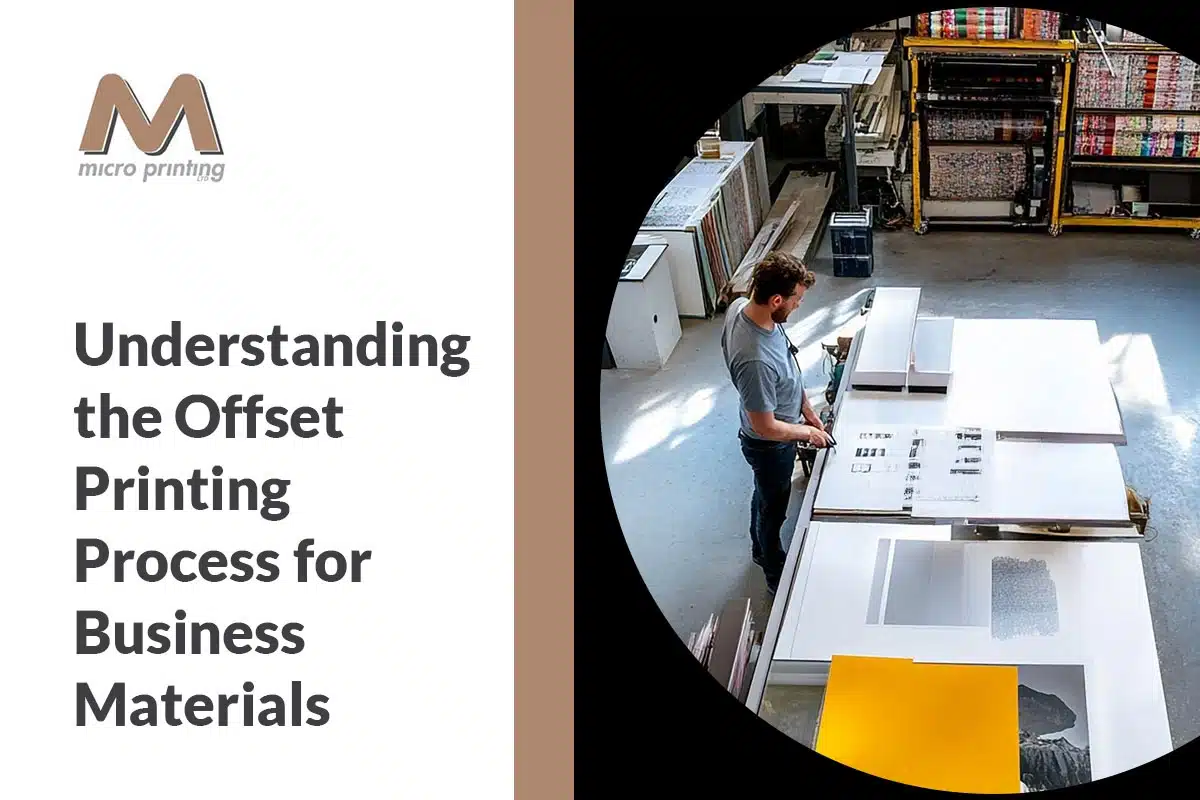
The offset printing method works by transferring ink from a metal plate cylinder to a rubber-wrapped blanket cylinder, then onto the printing surface. Have a look at the detailed process to learn how it works:
Preparation of the Pre-Press
Designers and printing operators digitally prepare the image and make the necessary adjustments for printing. This process includes creating several versions of the image, focusing on the CMYK colour groups (Cyan, Magenta, Yellow, and Key).
Setting the image colour groups ensures that the images to be printed are high quality, high resolution, and accurately coloured. Each version of the image is then laser-etched onto an aluminum printing plate, which is wrapped around the blanket cylinder.
Before placing a printing order, you should discuss the availability of pre-press services with printing companies in Mississauga to make sure the final output is error-free.
Feeding
Once the operators calibrate the printers to the appropriate CMYK colour profiles, the printing process begins. To automate the process, air jets push a single sheet of paper into the offset printing machine. Modern printers have sensors that can shut down the system if the registered paper is too thick, which may cause two sheets to stick together during feeding.
From checking graphics and proofing to ensuring accurate pre-press services, the experts at Micro Printing ensure high-quality printing. We accept file formats including Illustrator, Photoshop, Quark, Acrobat, PostScript, and Microsoft Office 2003 and 2007, so you don’t have to worry about sending a specific-format file.
The Four Colour Technology (CMYK Process) that we use requires minimal setup time, and the printed output is impressive. So, you don’t have to worry about your file’s colour profile; you can discuss it with the vendor to achieve the desired print quality.
Printing
The ink passes through a series of cylinders and rollers before reaching the paper. At this stage, water is applied to the aluminum plate by dampening rollers before the ink touches it. The ink adheres only to the image areas of the aluminum plate cylinder, while water cleans the non-image areas.
When the plate cylinder revolves, it transfers the ink onto the rubber-wrapped blanket cylinder below it. This blanket cylinder is the only inked cylinder that touches the paper. There is an impression cylinder beneath the paper that presses it up so that the ink can be fused into the paper. Then, the paper passes through a series of cylinders, each with a distinct CMYK-coloured ink, to form the final print.
Drying
When the paper receives the final coat of ink, the printing system deposits it on a stack at the end. At this point, the ink is still wet. Micro Printing uses different types of inks, such as sheetfed, UV-hardening, and cold-set inks, in our offset printing process to meet your unique needs and deliver the desired print output.
- Sheetfed ink is a specialized, paste-like printing ink used especially in offset printing. Instead of using a continuous roll, operators insert pre-cut paper sheets into the press. This ink has specific properties, such as being thick and sticky but fast-drying, which make it work well on individual cut sheets.
- UV-hardening ink is a specialized ink that instantly transforms from liquid to solid when exposed to ultraviolet light. It uses a chemical reaction triggered by UV light to bond instantly and harden on the material’s surface.
- Cold-set ink is specially formulated for web offset printing. It dries naturally without extra heat by absorbing into porous, uncoated paper. Then, an anti-set-off powder is applied to the printed sheets. This powder is a fine particulate that helps create a minimum distance between the piled sheets, thereby preventing the ink from smudging or sticking.
Post-Press Phase
At this phase, the offset materials are finished and prepared for handling. This phase includes important activities such as cutting, binding, and gluing to ensure the finished material meets your expected quality standards and specifications.
Cutting includes trimming the printed materials’ edges so that they are uniform in size and the final product looks neat and professional.
Finishing includes applying special coatings to enhance the appearance of offset-printed materials. For instance, if you want the material to look polished and professional, then choosing a glossy or matte finish is suitable. So, no matter what quantities of printed materials you have ordered, you can expect a professional finish from the offset printing method.
Advantages for Mississauga Businesses of Using Offset Printing
Beyond ensuring timely, high-quality printing at a reasonable cost, there are other advantages to using offset printingfor professional marketing materials.
Assures High-Quality Printing on Different Paper Shapes and Surfaces
Rubber blankets are used in offset printing, and these can be moulded to different surfaces. Whether on textured rectangular flyer paper or smooth, square-shaped magazine pages, this printing method produces sharp, clean images without spots or streaks, making it ideal for professional use.
Due to its versatility, reputable printing services in Mississauga can print a variety of marketing materials for your business using the offset printing technique to ensure they look eye-catching.
You can also request a pre-press proof before authorizing the full printing run. This allows you to see what the final product will look like and request changes.
Ensures Low Costs Due to Inexpensive Printing Parts
In offset printing, each printing task requires a customized printing plate. Due to technological advancements, the plates used in this printing method are simple to make, inexpensive, and reusable. The printing surface and the plate make no contact, which makes the plate long-lasting.
At Micro Printing, we use a short and innovative inking system called anicolour technology. This technology replaces the traditional, multi-roller ink train with a simple, two-roller system. It helps achieve high-quality, consistent colour in a few startup sheets, resulting in less paper waste and higher productivity.
So, when you need to print a material in large quantities, per-unit production cost drops significantly, making this printing method cost effective for you.
Fast Printing Ensured for High Volume
There are a few physical and chemical treatments involved in creating the metal plate, including anodizing (a process for making a metal surface durable and corrosion-resistant) of the aluminum. These treatments also give the metal the necessary properties to transfer the image onto the printing rollers. In this way, the entire offset printing system is established. But it’s worth the additional work for the speed gains in high-volume printing.
High-quality printing on any surface or shape; low cost; and fast, high-volume printing are key advantages of offset printing. Reputable offset printing companies in Mississauga ensure your materials look neat and professional after printing, helping attract your customers. For these reasons, many businesses in Mississauga still choose this printing method when ordering their marketing materials. Contact Micro Printing for high-quality printing that meets your expectations.